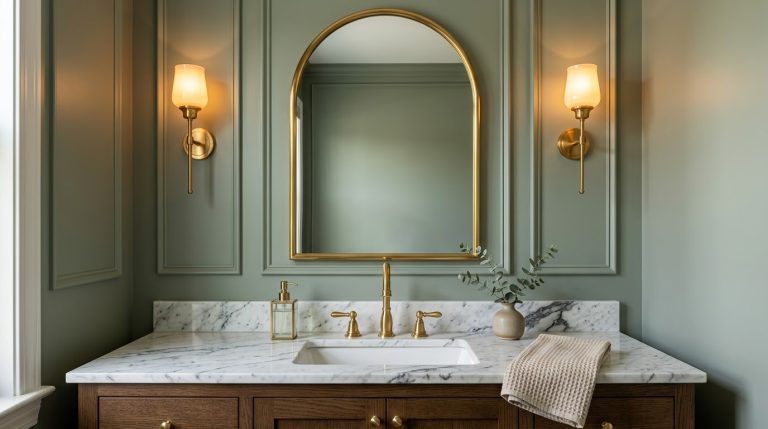
17 Small Bathroom Wall Colors That Look Amazing With a White Vanity
A white vanity is the little black dress of the bathroom. It goes with everything, it keeps the room bright, and it never looks dated.
But here is the catch: when the vanity is white, the wall color does all the talking.
Pick the wrong shade, and a small bathroom can feel cramped, cold, or flat.
Pick the right one, and the same tiny room feels fresh, spa-like, and surprisingly spacious. So which colors actually work?
This guide shares 17 small bathroom wall colors that pair beautifully with a white vanity. You will find soft neutrals, calming greens, bold darks, and a few surprises.
Each idea includes the mood, the best finishes, and the styling details that make it work.
You will also learn how to test paint, choose a finish, and avoid the mistakes that make small bathrooms feel smaller.
Ready to give your bathroom a color glow-up? Let’s start with the basics.
Why a White Vanity Is a Smart Starting Point
White vanities reflect light, which is a gift in a small bathroom.
They bounce daylight and lamp light around the room, so the space feels bigger and brighter.
They also look clean, which matters in a room where cleanliness is the main goal.
A white vanity also gives you total color freedom. Because white is neutral, nearly any wall color looks good next to it.
You can go soft, bold, warm, or cool, and the vanity will keep the room balanced.
White cabinets pair with every hardware finish too. Brass, chrome, black, and nickel all look right at home. That means you can change your wall color later without replacing the vanity.
Finally, white vanities work in every style. Farmhouse, modern, coastal, traditional, and boho bathrooms all use them. Your wall color simply sets the personality.
How to Choose a Wall Color for a Small Bathroom
Small bathrooms are tricky because every choice feels big. A few simple guidelines make the decision easier.
Check your natural light. A bathroom with a window can handle deeper colors, because daylight keeps them from feeling heavy. A windowless bathroom needs lighter, warmer shades and good artificial lighting.
Look at your fixed finishes. Your floor tile, tub, and countertop will not change, so the wall color must match their undertones. Warm beige tile calls for warm wall colors, and cool gray tile calls for cool ones.
Decide on a mood. Do you want calm and spa-like, cheerful and bright, or dramatic and cozy? Color sets emotion faster than any other design element.
Think about adjoining rooms. The bathroom does not have to match the hallway, but the colors should not clash when you see both at once.
Test samples in the room. Paint two large swatches on different walls and watch them across a full day. Bathroom light changes a lot, and a color that looks great at noon can look dull at night.
Best Paint Finishes for Bathrooms
Color is only half of the decision. The finish determines how the paint handles moisture, how it reflects light, and how easy it is to clean.
Satin is the most popular choice. It has a soft sheen, resists moisture, and wipes clean easily. It works well on most bathroom walls.
Semi-gloss is the most durable and moisture-resistant. It reflects more light, so it suits trim, ceilings in humid rooms, and walls that get splashed.
Eggshell has a gentle, low sheen that hides wall flaws. It is fine in bathrooms with good ventilation, but it may not hold up as well to steam.
Matte looks the softest and richest, especially in dark colors. Choose a scrubbable, bathroom-rated matte formula if you want that look.
Whatever you choose, use a mildew-resistant bathroom paint and run the exhaust fan during every shower. That one habit protects your color for years.
1. Sage Green
Sage green is the star of modern small bathrooms. Soft sage walls with a white vanity feel calm, natural, and quietly stylish.
The gray undertone keeps the green from looking too bright or minty. It also pairs beautifully with white cabinetry, brass hardware, and natural wood accents.
Add a woven mat, a wooden stool, and a small plant. The result feels like a spa in a garden, and you did not have to leave the house.
2. Warm White
When in doubt, go warm white. A soft, warm white keeps a small bathroom bright and gives it a clean, airy feel.
Choose a white with a hint of cream so it does not look stark next to a white vanity. Two whites that match too closely can look flat, so a subtle difference adds depth.
Add color through towels, art, and greenery. A white bathroom is the perfect blank canvas for accessories.
3. Light Greige
Greige blends gray and beige, which makes it one of the most versatile colors available. Light greige walls feel warm, calm, and modern.
This shade hides water spots and fingerprints better than white. It also works in nearly any lighting, so it is a safe pick for windowless bathrooms.
Pair it with a white vanity, a black faucet, and a woven basket for a clean, contemporary look.
4. Pale Sky Blue
Pale blue reads as clean, fresh, and calm. Soft sky blue walls with a white vanity create a breezy, coastal feel that suits small spaces beautifully.
Choose a blue with a touch of gray so it does not feel babyish. The softer shade also reflects light, which helps the room feel bigger.
Add white towels, a jute rug, and a seashell or two. The room instantly feels like a seaside retreat.
5. Navy Blue Accent
Dark colors can work in small bathrooms, and navy proves it. A navy accent wall behind the vanity or toilet adds depth and elegance.
Keep the other walls white or light so the room does not feel closed in. The white vanity pops against the navy and looks crisp and high-contrast.
Brass hardware and a round mirror finish the look. Use warm bulbs so the navy glows instead of looking flat.
6. Soft Blush Pink
Blush is more sophisticated than people expect. Soft blush walls add a gentle warmth that flatters skin tones and feels welcoming.
Choose a muted pink with a gray or beige base so it feels grown-up. Pair it with a white vanity, gold fixtures, and a marble-look countertop.
This color works especially well in powder rooms and guest baths. It makes visitors feel pampered.
7. Eucalyptus Gray-Green
Eucalyptus sits between green and gray. A pale eucalyptus wall feels earthy, soothing, and subtle.
It is a great choice if sage feels too green and gray feels too cool. The color changes slightly with the light, which gives the room quiet depth.
Pair it with a white vanity, chrome or brushed nickel fixtures, and white towels. The look is fresh and understated.
8. Warm Taupe
Taupe adds earthy warmth without taking over. Warm taupe walls bring a cozy, spa-like feel to a small bathroom.
The soft brown-gray tone pairs beautifully with a white vanity and natural textures like wood, rattan, and linen. It also hides splashes and dust well.
Choose a taupe with a slightly warm undertone if your room has cool lighting. It keeps the space inviting.
9. Dusty Teal
Teal brings color and personality. Dusty teal walls feel rich and slightly vintage without overwhelming a small room.
Choose a muted shade with gray in it. Bright teal can feel loud, but dusty teal feels moody and sophisticated next to a white vanity.
Add brass or copper accents for warmth. Teal and metal together feel like a classic boutique hotel.
10. Butter Yellow
Yellow makes a small bathroom feel sunny. Soft butter yellow walls add cheer and warmth, especially in rooms with little natural light.
Choose a creamy shade rather than a bright lemon. Pair it with white trim, a white vanity, and gray or white towels for a balanced look.
Add fresh flowers or a plant for a garden-like mood. Yellow bathrooms make mornings feel brighter.
11. Deep Forest Green
Want drama? Deep forest green turns a tiny bathroom into a jewel box. The dark color makes the walls recede and the white vanity glow.
Use a satin or matte finish and plenty of warm lighting. Brass fixtures and a wood-framed mirror complete the look.
This bold choice works best in a bathroom with a window or good artificial light. In a dark room, keep the green balanced with white trim and bright accessories.
12. Charcoal
Charcoal is moody and modern. Charcoal walls with a white vanity create strong contrast and a sleek, upscale look.
Choose a charcoal with a soft base so it does not feel harsh. Pair it with brushed brass or matte black hardware.
Balance the dark walls with a light floor and a large mirror. Reflective surfaces bounce light back into the room.
13. Lavender Gray
Lavender gray is a quiet, elegant color. Soft lavender-gray walls feel calm and slightly romantic.
The subtle purple undertone adds interest without feeling bold. It pairs well with white cabinets, silver fixtures, and soft gray towels.
This color looks beautiful in the evening, when warm light makes the lavender glow.
14. Terracotta
Terracotta is warm, earthy, and increasingly popular. Soft terracotta walls bring a sun-baked, Mediterranean feel to a small bathroom.
Choose a muted clay shade rather than a bright orange. The white vanity keeps the room fresh, while the warm walls add comfort.
Add woven baskets, linen towels, and a rattan mirror. The result feels like a villa bathroom.
15. Seafoam Aqua
Seafoam is cheerful but calm. Pale seafoam walls feel crisp and clean, with a retro edge.
Pair them with a white vanity, chrome fixtures, and white subway tile for a vintage-inspired look. A soft wood stool adds warmth.
Seafoam works especially well in small bathrooms with natural light, because it keeps the room airy.
16. Mushroom Brown
Mushroom is a soft brown-gray that feels sophisticated. Mushroom-toned walls create a cozy backdrop for a white vanity.
The neutral tone works with nearly any floor tile and hardware finish. It feels warm without looking dated.
Add white towels, brass accents, and a leafy plant. The room feels instantly calm and collected.
17. Color-Drenched Walls and Ceiling
Here is a designer trick: paint the walls, trim, and ceiling in the same color. This color-drenching approach makes a small bathroom feel wrapped and intentional.
Choose a soft green, blue, or warm neutral. The white vanity then stands out as the one contrast piece.
Use a satin finish on the walls and a flat or matte finish on the ceiling. The subtle sheen difference adds depth.
How to Style a Small Bathroom with a White Vanity
Color sets the stage, and styling finishes the performance. A few smart choices make a small bathroom look polished and spacious.
Hang a large mirror over the vanity. A big mirror reflects light and visually doubles the room. Choose a round or arched shape to soften the straight lines.
Use wall-mounted lighting, like sconces, to free up counter space. Warm bulbs make skin tones look natural and keep the wall color rich.
Keep the counter clear. A tray for soap and a small plant is enough. Store the rest in drawers or baskets.
Choose towels in a color that complements the wall. White towels work everywhere, while a deeper shade of the wall color adds a layered look.
Add a simple rug or runner. It adds texture and color, and it softens the floor.
Hardware and Fixture Pairings
Your hardware finish affects how the wall color feels. Choose carefully, and the whole room clicks.
Brass warms up cool wall colors like sage, blue, and gray. It looks luxurious and slightly vintage.
Matte black adds modern contrast. It works especially well with light walls like warm white and greige.
Chrome and nickel feel crisp and clean. They suit pale blue, seafoam, and traditional bathrooms.
Copper and bronze add depth to warm tones like terracotta, taupe, and deep green.
Keep one main finish and one accent. Mixing three or more metals can make a small bathroom look cluttered.
Common Small Bathroom Paint Mistakes
Choosing paint without testing. Always test samples in your actual bathroom light. Store lighting is very different.
Using a flat paint in a wet room. Choose a finish rated for moisture. Flat paint can stain and peel.
Ignoring the ceiling. A bright white ceiling in a colorful bathroom can look stark. Consider a softer white or a matching color.
Skipping ventilation. Poor airflow ruins paint. Run the fan during and after every shower.
Going too dark without enough light. Deep colors need good lighting. Add sconces and a large mirror before committing.
How to Test Paint Samples Like a Pro
The fastest way to regret a paint color is to skip testing. A tiny chip under store lighting tells you almost nothing about how the color will behave in your bathroom.
Use large swatches. Paint a sample at least 12 by 12 inches, or use peel-and-stick sample sheets. Small patches trick your eye.
Test on two walls. Place one swatch on the wall behind the vanity and another on the wall near the door. The two walls get different light, and the color can shift between them.
Put the swatch next to your fixed finishes. Hold it beside the floor tile, the countertop, and the white of the vanity. Undertones show up fast when colors sit side by side.
Watch it all day. Check the color in the morning, at midday, and at night under your bathroom lights. A shade that looks soft at noon may turn gray or green after sunset.
Live with it for a few days. Give your eye time to adjust. If you still like the color after three days, you have a winner.
Full Room Palettes That Work with a White Vanity
Stuck on how the wall color fits into a complete design? These palettes give you a head start.
Spa Retreat: sage green walls, white vanity, natural wood stool, white towels, brushed brass hardware. Calm, earthy, and fresh.
Coastal Breeze: pale blue walls, white vanity, jute rug, chrome fixtures, striped towels. Light, breezy, and clean.
Modern Moody: charcoal or deep green walls, white vanity, matte black fixtures, round mirror, white subway tile. Dramatic and sleek.
Warm Neutral: greige or taupe walls, white vanity, woven baskets, bronze hardware, linen towels. Cozy and balanced.
Garden Party: butter yellow or blush walls, white vanity, brass fixtures, fresh flowers, floral art. Cheerful and sweet.
Use these as a starting point and adjust the details to match your home. The right palette should feel like you.
Matching Wall Color to Floor Tile and Countertops
Your walls do not live alone. They sit next to your floor, your countertop, and your tub, so the colors need to get along.
With gray or black tile, choose warm wall colors like greige, taupe, or butter yellow. Warm walls balance the cool floor and keep the room from feeling cold.
With beige or tan tile, choose soft greens, warm whites, or muted blues with warm undertones. Avoid cool gray, which can make beige look dingy.
With white marble or marble-look countertops, nearly every color works. Sage, navy, and blush look especially elegant against white and gray veining.
With wood-look floors, choose colors that echo nature, like sage, eucalyptus, or soft blue. They highlight the wood grain and keep the room organic.
With black and white patterned floors, keep walls simple. A soft white, light gray, or muted green lets the floor stay the star.
When in doubt, bring home a tile sample and a countertop sample, then hold them against your paint swatch in the bathroom. That quick check prevents costly surprises.
Space-Saving Tricks for Small Bathrooms
Color helps a small bathroom feel larger, but layout and storage matter too. These tricks make the room work harder.
Mount the mirror and lighting higher than you think. When the eye travels upward, the ceiling seems taller. A tall, narrow mirror creates the same effect.
Use a floating shelf above the toilet. It adds storage without taking up floor space. Style it with folded towels, a plant, and one or two decorative items.
Choose a pedestal or wall-mounted sink if your vanity is not essential for storage. The visible floor underneath makes the room feel more open.
Replace a bulky shower curtain with a clear glass panel. Glass lets the eye see the full room, so it feels larger.
Add hooks instead of towel bars. Hooks take less space and look casual and charming. A simple wooden rail with three hooks handles towels, a robe, and a hand towel.
DIY Painting Tips for Bathroom Walls
Painting a small bathroom is one of the easiest and most affordable upgrades. A few pro tips make the result look flawless.
Clean the walls first. Bathrooms collect soap film and mildew, and paint will not stick to either. Wipe with a mild cleaner and let everything dry completely.
Fill nail holes and cracks, then sand lightly. Smooth walls make the color look richer and more even.
Use painter’s tape on trim, the ceiling edge, and fixtures. Press it down firmly and remove it while the paint is still slightly wet for a clean line.
Prime when you change from a dark color to a light one, or when the wall has stains. A good primer helps the color look true in fewer coats.
Apply two thin coats rather than one thick coat. Let the first coat dry fully, then add the second. Thin coats level better and last longer.
Keep the fan running and the window open if you can. Good airflow helps the paint cure properly, and the smell fades faster.
Wait at least a few days before hanging towels or wet items on freshly painted walls. Fully cured paint resists moisture much better.
Frequently Asked Questions
What color makes a small bathroom look bigger?
Light, cool colors like pale blue, soft green, and warm white reflect light and make a room feel more open. Matching the walls and trim also helps.
Can I use a dark color in a small bathroom?
Yes. Dark colors can look dramatic and cozy. Make sure you have good lighting and a large mirror, and keep trim and the vanity light for contrast.
What color goes best with a white vanity?
Almost anything works. Sage green, greige, pale blue, navy, and warm white are especially popular.
Should the ceiling match the walls?
It can. Painting walls and ceiling the same color creates a cozy, color-drenched effect. For a more traditional look, use a soft white on the ceiling.
What paint finish is best for bathroom walls?
Satin is the most popular choice. It resists moisture and cleans easily. Semi-gloss works for trim and high-splash areas.
How do I make a white vanity look less plain?
Add interesting hardware, a textured countertop, and a statement mirror. A colored wall behind it also adds instant personality.
Conclusion
A small bathroom is a small canvas, and that is a gift. You can try a bold color, a calming neutral, or a trendy shade without spending much. The white vanity keeps everything balanced.
Start by choosing the mood you want, then test two or three colors in your light. Pick hardware and accessories that support the palette, and keep styling simple.
Your bathroom does not need to be big to feel beautiful. It just needs the right color on the walls.